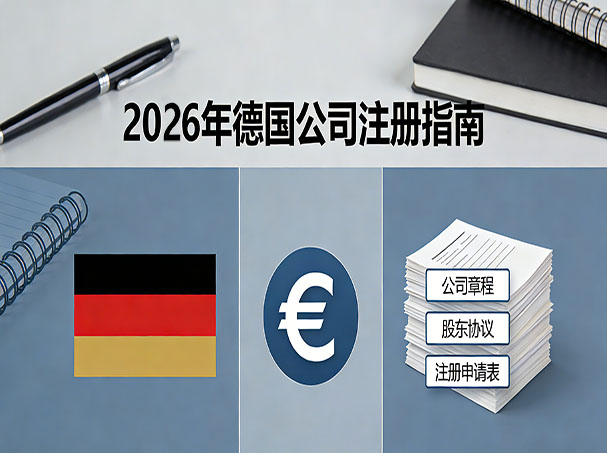
The German market holds immense potential.
As Europe's largest economy, Germany led the G7 with a 1.9% economic growth rate in 2016, boasting robust industrial and technological capabilities. Registering a company in Germany grants access to the EU market, reaching 500 million consumers, and rapidly enhances brand competitiveness by leveraging the reputation of' Made in Germany.'
Germany's well-established legal system, stringent intellectual property protection, and low corruption rate, combined with policies such as entrepreneurship subsidies and R&D tax incentives, create a stable business environment, making it an ideal choice for European expansion.
Preparatory Phase: The First Step to Success
(1) Selecting the Appropriate Company Type: Identify mainstream corporate structures and their core features to choose the most suitable option. Limited Liability Company (GmbH): The preferred choice for SMEs, where shareholders are liable up to their capital contributions. The minimum registered capital is €25,000, with a minimum paid-in capital of €12,500, offering a balance of flexibility and security.
Joint Stock Company (AG): Designed for large enterprises or companies preparing for IPO, with a minimum registered capital of €50,000 to be fully paid in. It features standardized management and strict disclosure requirements, making it well-suited for the capital market.
Simplified Limited Liability Company (UG): A preferred choice for startups, requiring a minimum registered capital of 1 euro. It mandates the annual transfer of 25% of profits to reserve funds until meeting the GmbH (German limited liability company) threshold.
Individual proprietorship: No minimum registered capital is required, ideal for freelancers, with unlimited liability for the operator.
(2) Company Name Selection: The name must be unique, free of sensitive terms, and legally compliant (e.g., GmbH/AG for specific types). We recommend conducting a preliminary name check and maintaining three backup options to increase approval chances.
(3) Required Registration Documents: All documents must be complete, with minor variations for individual and corporate shareholders. For individual shareholders: The following must be provided: a notarized passport, proof of address, capital contribution certificate, appointment documents, notarized articles of association, registered address, and a description of business scope.
For corporate shareholders: In addition to the standard documentation for natural persons, they must submit bilingual notarized documents from the parent company, investment resolution, and a disclosure statement of ownership structure (UBO) to meet anti-money laundering requirements.
Registration process: Proceed step by step to ensure smooth registration.
The process is divided into three steps, with strict procedures to avoid delays:
(1) Submit application materials either online or offline. The key is to ensure accurate information, consistent signatures, and complete materials to prevent rejection of the application.
(2) The review process takes 1-3 months, during which we verify the company name, articles of association, shareholder information, etc. The progress may be delayed due to the complexity of materials or during peak periods.
(3) Obtain the certificate to open a company account (submit registration documents and business plan). Within one month of obtaining the registration certificate, apply for a tax number to ensure compliant operations and fund flow.
Registration Costs: Strategic Planning for Registration Costs.
Registration costs fall into two categories, and proactive planning helps control expenses:
(1) Official fees (including notarization, registration, and announcement fees);
(2) Other fees (such as attorney fees, address fees, and account opening fees).
Post-Registration
Maintenance: Ensuring Continuous Operations. Compliance maintenance after registration is crucial, with four key aspects to focus on:
(1) Annual reports must be submitted by March 31 or May 31 of the following year, along with tax forms. Late submissions incur penalties, and prolonged non-compliance may result in inclusion in the Business Abnormality List.
(2) Financial records must be retained for 10 years. Large enterprises are required to undergo mandatory external audits, while small and medium-sized enterprises may opt for audits based on their needs, ensuring clear and accurate accounting.
(3)Tax Registration and DeclarationComplete tax registration within 1 month after registration. The main taxes include 19% value-added tax (7% for some), approximately 15.825% corporate income tax, and 7%-17% trade tax. Declarations are made monthly/quarterly/annually according to the scale.
(4) Employee Management: All hires must sign written contracts, with statutory social insurance contributions made for employees. Labor regulations regarding working hours, overtime, and leave must be strictly observed.
FAQ: Troubleshooting and Advancing.
Is a German resident required to be the legal representative? No. Non-EU residents must typically register a GmbH/AG with an EU resident legal representative/agent; some states permit non-EU legal entities, provided they submit proof of actual business operations.
Is registered capital required to be paid in full? Yes. For GmbHs, the minimum paid-in capital is 12,500 euros (minimum 25,000 euros); for AGs, the full amount of 50,000 euros must be paid in; and for UGs, the entire registered capital (minimum 1 euro) is required.
How long does registration take: Typically 1-3 months. Applications with complete materials and simple structures will be reviewed faster, while complex cases may take longer.
Are there restrictions on business scope? There are few restrictions, but special industries such as finance and healthcare require additional licenses and qualifications.
Summary and Outlook: Establishing a German company is a pivotal step in European business expansion, requiring rigorous oversight throughout the entire process. Germany's superior business environment and brand influence offer enterprises extensive growth opportunities.
Follow this guide to complete your registration and consult professionals when needed to mitigate risks. May your business thrive in Germany, establish a strong presence in Europe, and achieve lasting success.