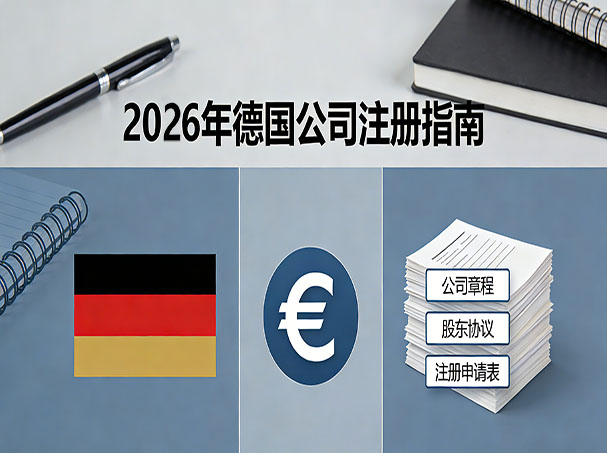
Located in the heart of continental Europe, Germany has a population of approximately 84 million, making it the most populous country in the European Union. It is also Europe’s largest economy and the world’s fourth-largest economic power. Germany is the EU country with the highest volume of investment and largest number of projects in China. However, the stock of Chinese investment in Germany accounts for less than 1% of the total foreign investment attracted by Germany, indicating a significant gap and imbalance in bilateral investment between China and Germany.
Company Registration in Germany
I. Basic Requirements for German Company Registration
At least 1 shareholder and 1 director, with no nationality restrictions.
The same individual can serve as both shareholder and director, provided that they are at least 18 years old. Shareholders are the investors and actual owners of the company, while directors are the managers responsible for the company’s daily operations.
The company may engage in any legitimate business activity, with no restrictions on business scope imposed by German regulations.
The minimum registered capital for a German company is €25,000, with a mandatory paid-in capital requirement of at least 50% verified through capital inspection.
II. German Company Registration Process
Prepare materials, define the company name and business scope.
Conduct preliminary name verification (submit 3 proposed names).
Draft and prepare signature-ready documents.
Sign documents including the Power of Attorney (POA).
Complete Apostille certification (no in-person attendance required).
Confirm the notarized documents for company incorporation.
Undergo notarization by a German notary public.
Sign the application for commercial registration and complete its Apostille certification.
Sign the shareholder register and the legal representative’s statement of no criminal record (Notarial Advice).
Open a corporate bank account.
Inject the paid-in registered capital.
Submit documents for review and complete company registration.
Receive confirmation of successful registration.
III. Required Documents for German Company Registration
Shareholders’ company registration certificates.
Articles of Association.
Detailed business plan.
Power of Attorney (POA).
Passports of legal representatives/directors.
IV. Taxation Overview
Germany operates a three-tier administrative system (federal, state, and local/municipal levels), with each level levying its own taxes. In total, over 30 types of taxes are imposed across all levels of government. While the tax system covers a wide range of levies, it is dominated by two key taxes: income tax and value-added tax (VAT), which account for around 30% and 40% of Germany’s total tax revenue respectively; all other taxes combined make up approximately 30%. The main taxes include:
Value-Added Tax (VAT): Rates vary by product category.